
Is there a Reason Patients Shouldn’t Start Their Phototherapy Journey at Home?
By Dr. Raja Sivamani, MD, MS, AP, FAAD
Medical Director, Pacific Skin Institute; Board Member, Phothera

As dermatologists, we are constantly evaluating new therapies, new technologies, and new ways to improve patient outcomes. But some of the most meaningful advances in medicine do not come from changing the treatment itself. They come from changing how that treatment is delivered.
For decades, the traditional pathway for phototherapy has been straightforward. Most patients would begin treatment in the office, become familiar with the process, demonstrate adherence, and, if appropriate, transition to a home device later. Home phototherapy devices required close oversight by the physician’s office, and it gave physicians confidence that patients understood the treatment, tolerated therapy appropriately, and could safely continue treatment outside the clinic.
As someone who has prescribed phototherapy throughout my career, when I look at how home phototherapy has evolved, I find myself asking a different question:
Does every appropriate patient still need to begin phototherapy in the office?
The Therapy Hasn’t Changed. The Technology and Oversight Has.
Narrowband ultraviolet B (NB-UVB) remains one of our most established and highly effective skin-directed treatments for conditions such as vitiligo, psoriasis, atopic dermatitis, and early-stage cutaneous T-cell lymphoma (CTCL). Its safety profile is well understood, its efficacy is supported by decades of clinical evidence, and it continues to play an important role in dermatologic care.¹
Historically, prescribing home phototherapy meant asking patients to manage a significant portion of the treatment journey independently. Patients relied on printed dosing schedules, manually tracked treatments, and were responsible for understanding when to progress therapy or when to contact their physician. This approach was fraught with potential for side effects, burns, and increased burden on physicians’ offices. It is no surprise that many patients and physicians mutually found this challenging and ultimately discontinued treatment due to many of these logistical barriers.
That reality shaped physician behavior. The office-first approach did not develop by accident. It reflected the realities of how home phototherapy was delivered at the time. Starting patients in the clinic helped establish confidence for both the physician and the patient.
Today, however, the needs of the patient and the technology of the devices have evolved. Office based therapies continue to deliver high-quality phototherapy, but they place increased time and financial burdens on patients. As practices manage a growing demand for chronic skin disease treatments while balancing access to office-based care, the need for improved delivery of home-based therapy with better technology, better dosing algorithms, and streamlined useability for patients becomes imperative.
Patients want convenience and simplicity. Physicians want safety and confidence. Practices want consistency without additional burden. And payers want to be conscious of the cost to the system.
From Decades of Phototherapy Experience to Guided Treatment
Formed through the merger of Daavlin and National Biological, Phothera brings together more than 80 years of combined leadership in phototherapy, delivering innovation for the treatment of photoresponsive skin diseases. Across those decades, one lesson has become clear: while NB-UVB is a proven therapy, the patient experience often determines whether patients stay engaged long enough to realize its full benefit.
That insight ultimately led to the development of the Clearlink® Controller with Guided Mode technology. Rather than asking patients to interpret dosing schedules and manage treatment progression independently, Guided Mode was designed to create a more structured treatment journey while preserving physician oversight.
Built on established clinical dosing principles and research-backed protocols, Guided Mode begins with a recommended starting dose based on the patient’s Fitzpatrick skin type and prescribed treatment protocol.² From there, the system provides individualized treatment guidance designed to support appropriate progression throughout therapy.
Before each treatment session, patients answer brief questions regarding their skin’s response to the previous treatment. Using that feedback, Guided Mode supports progression within the physician-prescribed treatment plan while helping patients remain aligned with established treatment protocols. Integrated safety controls and structured dosing guidance help simplify the treatment experience while reinforcing consistency and adherence. ³
The goal is not to automate clinical decision-making. The goal is to help patients successfully follow the treatment plan their physician has prescribed in a way that fits their lifestyle and supports continuation of therapy for chronic skin conditions that often require frequent, ongoing treatment.
As Padma Sundar, Chief Commercial Officer at Phothera, shared: “We asked ourselves a simple question: if we were designing the home phototherapy experience today, knowing everything we’ve learned over the last eight decades, would we build it the same way? The answer was no. We didn’t want to change phototherapy—we wanted to evolve with it and improve the experience of receiving it.”
Rethinking Where Phototherapy Treatment Begins
Perhaps the most important implication of these advancements is that they challenge one of the long-standing assumptions surrounding phototherapy.
For many dermatologists, home phototherapy has traditionally been viewed as a stepwise progression: begin treatment in the office, establish consistency, and then transition to home when appropriate. But that sequence was largely shaped by historical limitations in patient support, treatment tracking, and technology—not by the clinical potential of home phototherapy itself.
Today, one of the biggest barriers to successful phototherapy is often not the treatment itself. It is the burden of receiving it.
Frequent office visits can be difficult to sustain amid work schedules, school commitments, family responsibilities, travel, and other everyday demands. As a result, some patients discontinue treatment before realizing its full benefit—not because phototherapy is ineffective, but because the logistics become difficult to maintain.
For appropriate patients, starting treatment at home can remove many of those barriers. Instead of asking patients to organize their lives around treatment, home phototherapy allows treatment to fit more naturally into their routines. When therapy is easier to access and maintain, patients may be more likely to stay engaged, remain consistent, and experience the full benefit of treatment.
The LITE study reinforced this concept. While home phototherapy demonstrated clinical outcomes comparable to office-based treatment for appropriate patients, adherence was significantly higher among patients treated at home.³ More than half of patients with psoriasis receiving home phototherapy met adherence targets compared with fewer than one in six patients receiving office-based treatment (51% vs 16%).³ A 2026 systematic review and meta-analysis in vitiligo reported numerically higher adherence with home phototherapy than with in-office therapy (89.6% vs 83.7%).⁴
As physicians, that difference is difficult to ignore. These findings suggest that convenience is not simply a patient satisfaction benefit—it may be a meaningful contributor to treatment success. When patients can incorporate therapy into their daily routines rather than cause disruptions to their daily lives by repeatedly traveling to a clinic, they are more likely to remain engaged with treatment over time.
A Shift in Mindset, Not a Shift in Medicine
This is not a call to replace office-based phototherapy. In-office phototherapy remains an essential and highly effective treatment option and will continue to play an important role in dermatologic care. Rather, this is a call to reconsider when home phototherapy should enter the conversation and if it should enter earlier on for patients. Instead of asking, “When should I transition this patient to home phototherapy?” we may begin asking, “Is there a clinical reason this appropriate patient should not begin at home?”
That subtle shift has meaningful implications. It can reduce delays in treatment initiation, remove logistical barriers, improve adherence, and allow patients to experience the benefits of phototherapy in a way that fits their lives.
The conversation is also changing from an access perspective. As healthcare coverage continues to evolve and more patients gain access to home phototherapy options, many of the historical barriers that prevented patients from receiving treatment at home are decreasing. For appropriate patients—whether receiving phototherapy as monotherapy or as part of a broader treatment plan—the opportunity to initiate home therapy earlier is becoming increasingly realistic.
Technology should support clinical care—not replace it. When patients have guidance built into their treatment journey, it helps create a more consistent experience while allowing physicians to remain in control of the treatment plan.
For physicians who have not recently explored modern home phototherapy systems, these changes may not be immediately apparent. But the assumptions many of us formed years ago may no longer reflect today’s patient experience.
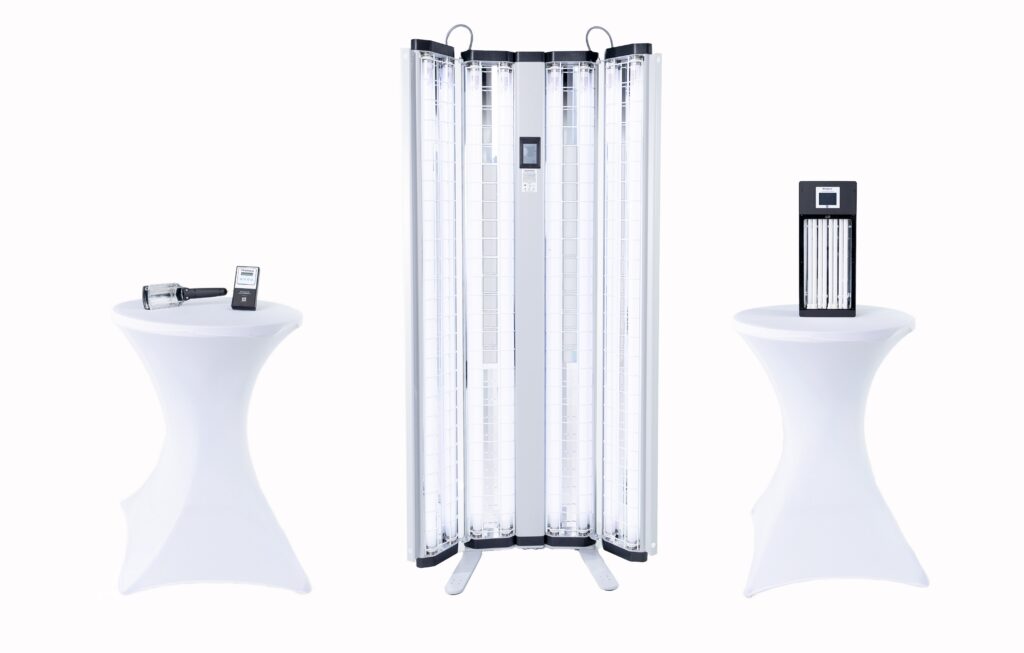
As Guided Mode becomes the standard treatment experience on the Phothera 200 and Phothera 600-3D, we are entering an important new chapter for phototherapy. Not because the science has changed, and not because NB-UVB is different, but because the experience surrounding treatment has evolved – inclusive of simple training materials provided by Phothera to help patients start their treatment plan.
For the right patient, home may no longer be the next step in the treatment journey. It may be the first.
References
- Elmets CA, Lim HW, Stoff B, et al. Joint American Academy of Dermatology–National Psoriasis Foundation guidelines of care for the management and treatment of psoriasis with phototherapy. J Am Acad Dermatol. 2019;81(3):775-804. doi:10.1016/j.jaad.2019.04.042.
- Phothera. Guided Mode Controller Product Information. Accessed July 2026. https://www.photherahcp.com/products/controllers/guided-mode-controller/
- Gelfand JM, Armstrong AW, Lim HW, et al. Home- vs office-based narrowband UV-B phototherapy for patients with psoriasis: the LITE randomized clinical trial. JAMA Dermatol. 2024;160(12):1320-1328. doi:10.1001/jamadermatol.2024.3897.
- Xireaili F, Ha H, Liu ZF, et al. “The Effectiveness of Home-Based Phototherapy in Vitiligo: A Systematic Review and Meta-Analysis.” Photodermatology, Photoimmunology & Photomedicine. 2026;42(2):e70079. doi:10.1111/phpp.70079.